Why Spiked Shoes Are Essential for Epoxy Flooring
Achieving a smooth, even and professional epoxy floor requires more than choosing the right coating. Installers must also be able to move across the freshly applied material without leaving footprints or disturbing the surface.
This is where epoxy spiked shoes become essential.
Spiked shoes allow flooring contractors to walk carefully over wet epoxy while rolling the coating, removing bubbles, broadcasting decorative flakes and correcting uneven areas. When properly selected and used, they help improve efficiency while protecting the final finish.
What Are Epoxy Spiked Shoes?
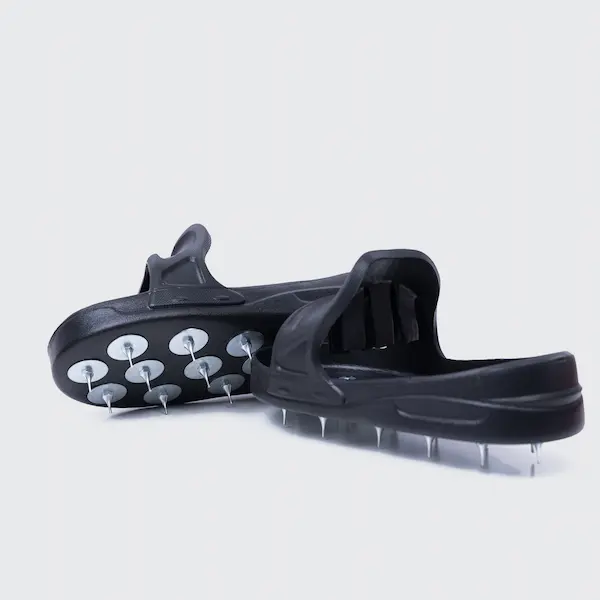
Epoxy spiked shoes are specialised flooring tools worn over work boots or other suitable safety footwear. Their platforms contain multiple narrow spikes that reduce the contact area between the installer and the wet coating.
Ordinary work boots place the installer’s full weight across a large outsole. This pushes the liquid epoxy away and creates deep footprints. Spiked shoes distribute the load across many small contact points, allowing the coating to flow back into the small holes after the spikes are lifted.
They are commonly used for:
- Epoxy floor coatings
- Polyurethane flooring systems
- Self-leveling compounds
- Decorative flake flooring
- Industrial resin floors
- Garage and warehouse floor coatings
Why Ordinary Shoes Cannot Be Used on Wet Epoxy
Fresh epoxy remains fluid during its working time. Walking across it with ordinary footwear can cause several problems:
- Deep and visible footprints
- Uneven coating thickness
- Contamination from dirt or moisture
- Lines and drag marks
- Damage to decorative patterns
- Surface defects after curing
These marks may not disappear automatically. In serious cases, the damaged area must be sanded and recoated, increasing labour time and material costs.
Spiked shoes help installers enter the wet area while minimising direct contact with the coating.
1. They Help Prevent Footprints
The primary purpose of spiked shoes is to prevent ordinary shoe impressions from forming in wet epoxy.
Each spike produces a very small contact point. If the epoxy is still within its working time and has suitable flow properties, the coating can normally close the small puncture marks after the installer moves away.
This produces a much cleaner result than walking directly on the surface with work boots.
However, the installer should leave the floor before the coating begins to cure. Epoxy that has already become thick or tacky may not flow back sufficiently to remove spike marks.
2. They Allow Access to the Entire Floor
On large projects, some areas cannot be reached safely from the perimeter. Installers may need to enter the coated area to:
- Reach the centre of the floor
- Distribute material into low areas
- Correct missed spots
- Operate a spiked roller
- Broadcast decorative flakes
- Inspect coating consistency
Without spiked shoes, these tasks become difficult or impossible after the material has been poured.
A planned walking route allows the installer to work across the floor and return to the exit without disturbing completed areas unnecessarily.
3. They Make Spiked-Roller Operation Easier
Spiked rollers are often used after epoxy has been spread. They help release trapped air, blend adjacent sections and improve surface uniformity.
For large areas, the installer may need to walk behind or alongside the roller. Spiked shoes make it possible to move through the wet coating while maintaining control of the tool.
The installer should use short, controlled steps and lift each foot vertically. Sliding the shoes can create grooves that may remain visible after curing.
4. They Support Decorative Flake Application
Decorative flakes are frequently broadcast over wet epoxy to improve appearance, texture and slip resistance.
On smaller floors, flakes may be applied from the edges. On larger floors, walking onto the coating may be necessary to achieve even coverage.
Spiked shoes allow the installer to reach the centre and distribute flakes more consistently. They also reduce the risk of leaving large footprints beneath the decorative layer.
The shoes must be clean before entering the coating so that dirt or cured material is not transferred to the floor.
5. They Improve Installation Efficiency
Epoxy coatings have a limited working time. Once the components are mixed, installers must spread, roll and finish the material before it begins to cure.
Spiked shoes help reduce delays by allowing workers to move directly to the area that requires attention. This can improve productivity during:
- Rolling
- Bubble removal
- Material distribution
- Surface inspection
- Flake broadcasting
- Detail correction
Faster access is especially valuable on large commercial and industrial projects.
6. They Help Maintain Consistent Coating Thickness
Walking through wet epoxy with ordinary shoes pushes material away from each footprint. This creates thin spots, thick edges and irregular coverage.
Because spiked shoes have much smaller contact points, they disturb less material. When used correctly, they help maintain a more consistent coating thickness across the floor.
Consistent thickness is important for appearance, durability and coating performance.
How to Choose the Right Spiked Shoes
Not all spiked shoes are suitable for every flooring system. Consider the following factors before making a selection.
Spike Length
The spike length should match the approximate material thickness.
Common options include:
- 20 mm for relatively thin coatings
- 28 mm for general epoxy flooring work
- 36 mm for thicker flooring materials
- 50 mm for deeper self-leveling applications
If the spikes are too short, the platform may touch the coating. If they are unnecessarily long, walking may become less stable.
Always consider the flooring manufacturer’s instructions and actual application thickness.
Platform Strength
The platform should be rigid enough to support the installer without excessive bending. A weak or flexible platform can reduce stability and cause uneven pressure.
The size should also be suitable for the work boot worn underneath.
Strap Design
Secure straps keep the spiked shoe firmly attached to the installer’s footwear.
Before entering the wet surface, check that:
- The straps are tightened
- The platform remains centred
- The heel does not lift away
- The work boot does not slide
- Buckles and fasteners are undamaged
Loose spiked shoes increase the risk of slipping and damaging the coating.
Spike Arrangement
Spikes should be distributed evenly across the platform. An appropriate arrangement improves balance and spreads the installer’s weight more consistently.
Missing, bent or loose spikes should be replaced before use.
Material Resistance
The platform and straps may come into contact with epoxy or cleaning products. Durable, solvent-resistant materials are generally easier to maintain and more suitable for repeated professional use.
How to Walk Correctly in Spiked Shoes
Correct walking technique is just as important as selecting the right product.
Put Them On in a Dry Area
Secure the spiked shoes over your work boots before entering the wet coating. Never try to attach or adjust them while standing on fresh epoxy.
Test Them Before Entering
Walk several steps on a protected, dry surface. Confirm that the shoes feel stable and that the straps remain secure.
Use Short Steps
Take slow, controlled steps. Long strides make it more difficult to maintain balance and increase the chance of dragging the spikes.
Lift Your Feet Vertically
Lift each foot straight upward before moving it forward. Do not slide or twist the shoes across the coating.
Avoid Standing Still
Remaining in one position for too long may leave deeper marks, especially in thick or slow-flowing materials.
Plan Your Exit
Decide where you will enter, which areas require access and how you will leave the floor. A planned route reduces unnecessary movement.
Common Mistakes to Avoid
Even professional tools can cause problems when used incorrectly. Avoid these common mistakes:
- Wearing loose or damaged spiked shoes
- Selecting spikes that are too short
- Entering epoxy after it has started curing
- Walking too quickly
- Sliding or dragging the spikes
- Standing in one position for too long
- Using shoes covered with cured material
- Failing to inspect the spikes before use
Installers should also avoid walking across wet epoxy unless it is necessary for the application.
Cleaning and Maintenance
Clean spiked shoes immediately after use, following the epoxy manufacturer’s safety and cleaning recommendations.
After every project, inspect:
- Spikes and screws
- Straps and buckles
- Platform condition
- Cured epoxy buildup
- Bent or missing components
Do not use damaged shoes on another project. Uneven spikes or loose fasteners can reduce stability and affect the finished surface.
Safety Considerations
Wet epoxy can be extremely slippery. Spiked shoes improve access but do not remove the risk of slipping or falling.
Installers should:
- Wear suitable safety footwear underneath
- Use chemical-resistant gloves
- Wear eye and skin protection
- Follow the safety data sheet
- Maintain slow and controlled movement
- Keep the work area organised
- Avoid unnecessary walking on the coating
Spiked shoes are application tools and should not be considered a replacement for proper personal protective equipment.
Final Thoughts
Spiked shoes are essential for many professional epoxy flooring installations because they allow installers to move across wet coatings while reducing footprints and surface disturbance.
They make it easier to operate spiked rollers, distribute decorative flakes, inspect the coating and reach the centre of large floors. More importantly, they help preserve consistent coating thickness and a cleaner final finish.
For the best results, choose the correct spike length, secure the straps over suitable work boots and use slow, vertical walking movements. Proper selection, technique and maintenance can make epoxy flooring work safer, faster and more efficient.