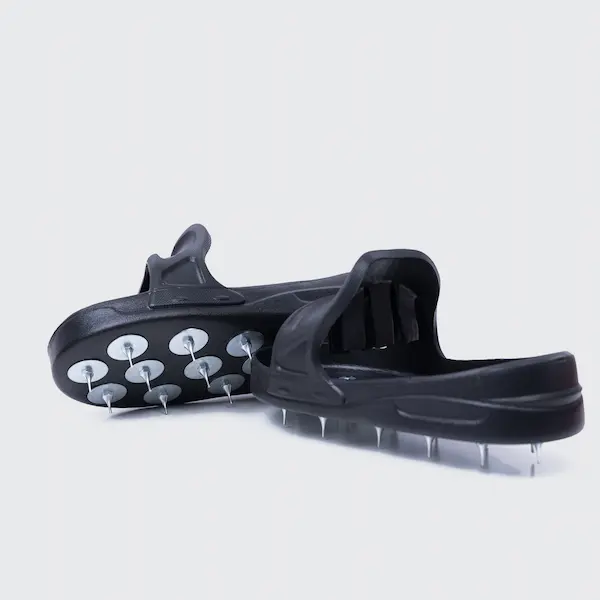
How to Choose the Right Spike Length for Flooring Work
Choosing the correct spike length is an important part of using spiked shoes for epoxy flooring, self-leveling compounds and other wet floor applications.
If the spikes are too short, the shoe platform may touch the wet material and leave marks. If they are unnecessarily long, walking can become less stable and more difficult to control.
The right choice depends on the flooring material, application thickness, viscosity and the work being performed. This guide explains how to select a suitable spike length for different flooring projects.
Why Spike Length Matters
Spiked shoes allow flooring installers to move across freshly applied materials while reducing direct contact between the shoe platform and the wet surface.
The spikes must provide enough clearance to keep the platform above the coating. At the same time, they should remain stable enough for the installer to walk, roll the surface and complete other tasks safely.
Choosing the correct length can help:
- Prevent the platform from touching wet material
- Reduce footprints and surface disturbance
- Improve balance while walking
- Make tool operation easier
- Maintain a more consistent floor finish
- Reduce unnecessary damage to the substrate
Spike length should always be considered before the material is mixed and poured.
Common Spike Lengths
Flooring spiked shoes are available with several spike lengths. Common options include 20 mm, 28 mm, 36 mm and 50 mm.
Each size is suited to different applications.
20 mm Spikes
Twenty-millimetre spikes are generally used for relatively thin flooring systems.
Typical applications include:
- Thin epoxy coatings
- Decorative resin coatings
- Flake broadcasting
- Spiked-roller operation
- Light surface finishing
Shorter spikes usually provide better stability because the platform remains closer to the floor.
However, they must still be long enough to prevent the underside of the platform from touching the coating.
28 mm Spikes
Twenty-eight-millimetre spikes are a versatile choice for general epoxy flooring work.
They may be suitable for:
- Standard epoxy floor coatings
- Medium-build resin systems
- Decorative flake floors
- General industrial floor applications
- Surface rolling and inspection
This length offers a practical balance between clearance and stability, making it a common option for professional flooring contractors.
36 mm Spikes
Thirty-six-millimetre spikes provide additional clearance for thicker flooring materials.
Typical applications include:
- Thicker epoxy systems
- Flowable resin flooring
- Some self-leveling compounds
- High-build floor coatings
- Projects requiring greater platform clearance
Because the installer stands farther above the substrate, movement should be slower and more controlled.
50 mm Spikes
Fifty-millimetre spikes are designed for deeper materials and specialised applications.
They may be used for:
- Thick self-leveling compounds
- Deeper cement-based flooring materials
- High-build underlayments
- Flooring systems requiring significant clearance
Long spikes can feel less stable than shorter options. They should only be selected when the material depth makes them necessary.
Always follow the flooring material manufacturer’s application and safety instructions.
Match the Spikes to the Material Thickness
The first factor to consider is the expected thickness of the wet flooring material.
The spikes must be long enough to keep the platform clear of the coating. However, this does not mean the spike length should simply equal the material thickness.
Additional clearance is required because:
- The installer’s weight may push the spikes toward the substrate
- Material thickness may vary across the floor
- Some areas may contain more material than expected
- The platform may flex slightly under load
- Walking can temporarily displace the coating
Before entering the wet area, compare the actual application depth with the available spike length and platform design.
Consider the Flooring Material
Different flooring materials behave differently under pressure.
Epoxy Coatings
Epoxy coatings may range from thin rolled layers to thicker, self-smoothing systems.
For relatively thin applications, shorter spikes are generally easier to control. Medium-build or high-build epoxy may require longer spikes to maintain sufficient clearance.
The coating’s working time is also important. If the epoxy has already begun to cure, it may not flow back into the small spike marks.
Self-Leveling Compounds
Self-leveling compounds are usually applied more deeply than thin epoxy coatings.
Longer spikes may be required to prevent the platform from contacting the material. The correct choice depends on the specified application depth.
The installer must also consider whether the compound is cement-based, resin-based or another type of flowable flooring material.
Decorative Flake Floors
Decorative flakes are often broadcast over wet epoxy. In many cases, shorter or medium-length spikes provide enough clearance while maintaining good walking stability.
Avoid dragging the shoes, as this can disturb both the coating and the distribution of the flakes.
Polyurethane and Other Resin Systems
Polyurethane and other resin floors vary in thickness and viscosity. Select the spikes according to the complete flooring system rather than relying only on the product name.
Consider the Material’s Viscosity
Thickness is not the only factor. Material viscosity also affects how the floor responds to spiked shoes.
Low-viscosity materials flow easily and may close small spike holes quickly. Thicker materials move more slowly and may retain marks for longer.
When working with a high-viscosity coating:
- Use controlled, vertical foot movements
- Avoid standing in one place
- Leave the surface before curing begins
- Follow the manufacturer’s working-time limits
Longer spikes do not automatically prevent marks. Correct timing and walking technique remain essential.
Balance Clearance and Stability
Longer spikes provide more clearance, but they can reduce walking stability.
Shorter spikes generally offer:
- Better balance
- Easier movement
- More precise tool control
- Less strain during long installations
Longer spikes provide:
- Greater clearance
- Better access in deeper materials
- Reduced risk of platform contact
The best choice is usually the shortest spike that still provides safe, adequate clearance above the wet flooring material.
Avoid choosing the longest available spikes simply because they appear more versatile.
Consider the Work Being Performed
The required spike length may also depend on the task.
Using a Spiked Roller
When operating a spiked roller, stability is important. The installer must control both body movement and roller pressure.
Choose spikes that provide enough clearance without making the walking position unnecessarily high.
Broadcasting Decorative Flakes
Flake broadcasting requires controlled movement and balance. Short or medium spikes are often easier to use when the underlying coating is relatively thin.
Spreading Self-Leveling Material
When using a gauge rake, spreader or smoothing tool in deeper self-leveling material, longer spikes may be required.
Inspecting or Correcting the Surface
For minor inspection and correction work, use the shortest suitable spikes to improve stability and reduce surface disturbance.
Check the Spike Tip Design
Spike length is not the only feature to consider. The tip design also affects how the shoes interact with the floor.
Sharp Spikes
Sharp spikes penetrate wet coatings easily and create small contact points. They are commonly used for epoxy and self-leveling applications.
Rounded Spikes
Rounded spikes may be used where damage to the substrate or an underlying layer must be reduced.
The correct design depends on the flooring system and the condition of the surface beneath it.
Check Shoe Size and Platform Design
The same spike length may feel different on different shoe platforms.
Before use, check:
- Platform rigidity
- Spike arrangement
- Number of spikes
- Position of the spikes
- Compatibility with your work boots
- Strap stability
- Ground clearance below the platform
A rigid, correctly sized platform helps distribute weight more evenly.
The spikes should be evenly installed and tightened securely before entering the wet floor.
Test Before Starting the Main Installation
If possible, test the selected spike length in a small controlled area or on a sample panel.
Check whether:
- The platform remains clear of the material
- The installer can maintain balance
- The spikes leave only small marks
- The material flows back correctly
- Walking disturbs the finish
- The straps remain secure
A short test can prevent expensive mistakes during the main installation.
How to Walk Correctly in Spiked Shoes
Even the correct spike length can damage a floor if the shoes are used incorrectly.
Follow these basic techniques:
- Put the spiked shoes on in a dry area.
- Tighten all straps over suitable work boots.
- Test your balance before entering the coating.
- Take short, slow steps.
- Lift each foot vertically.
- Do not slide or twist the spikes.
- Avoid standing still for long periods.
- Follow a planned route toward the exit.
- Leave the floor before the material begins to cure.
Wet flooring materials can be slippery. Always follow site safety requirements and wear appropriate personal protective equipment.
Common Selection Mistakes
Choosing Spikes That Are Too Short
If the spikes are too short, the platform may press into the coating. This can leave large marks and displace the material.
Automatically Choosing the Longest Spikes
Longer is not always better. Excessively long spikes can reduce balance and make it harder to control flooring tools.
Ignoring Thickness Variations
The floor may not have the same material depth everywhere. Consider low areas and sections where more material may collect.
Ignoring Platform Thickness
Spike length should be evaluated together with the construction of the shoe platform, not as an isolated measurement.
Using Damaged Spikes
Bent, loose or missing spikes create uneven weight distribution and reduce stability.
Entering the Floor Too Late
Even the correct spikes can leave permanent marks when the material is already curing.
Quick Spike-Length Guide
| Spike length | Typical application | Main advantage |
|---|---|---|
| 20 mm | Thin epoxy and resin coatings | Greater walking stability |
| 28 mm | General epoxy flooring work | Balance of clearance and control |
| 36 mm | Thicker epoxy and some self-leveling systems | Additional platform clearance |
| 50 mm | Deep self-leveling and high-build materials | Suitable for greater material depth |
This table provides general guidance only. Always base the final selection on the actual flooring system, application thickness and manufacturer’s instructions.
Cleaning and Maintenance
After use, clean the spikes and platforms before the flooring material fully cures.
Inspect the shoes for:
- Loose screws
- Bent spikes
- Missing spikes
- Damaged straps
- Cracked platforms
- Cured material buildup
Replace damaged components before the next project. Uneven spikes can make walking unstable and affect the finished floor.
Final Thoughts
Choosing the correct spike length requires balancing material clearance, walking stability and the requirements of the flooring system.
For thin epoxy coatings, 20 mm spikes may provide sufficient clearance and good control. A 28 mm option is commonly used for general epoxy flooring work. Thicker coatings and some self-leveling materials may require 36 mm spikes, while deeper applications may require 50 mm spikes.
The best choice is normally the shortest spike that keeps the platform safely above the wet material.
Before starting, confirm the application depth, inspect the shoes and test your balance. Combined with proper walking technique, the correct spike length helps reduce footprints, protect the finish and make flooring installation more efficient.